Process audit
We measure where the hours actually go before proposing anything, and rank candidates by hours saved against effort.
Workflow automation and AI integrations that remove repetitive manual work — built on the systems you already run, with a human in the loop wherever it matters.

Most AI projects fail for an unglamorous reason: they start with the technology and go looking for a use. The ones that succeed start with a specific piece of work that is repetitive, high volume and expensive in human hours — and then ask whether automation, AI or a simple rule would remove it.
Quite often the answer does not need AI at all. Copying orders between two systems is an integration problem. Chasing approvals is a workflow problem. Both are cheaper and more reliable to solve with ordinary software, and we will say so rather than sell you a model.
Where AI does earn its place is in the messy middle: reading unstructured documents, summarising long threads, classifying incoming requests, drafting responses a person then approves. In those cases we build the automation around the model carefully — with validation, fallbacks and a human review step — because a confidently wrong answer at scale is worse than no automation.
If several of these are true, there is almost certainly an automation worth building.
Book a process auditThree patterns that come up in nearly every business we look at.
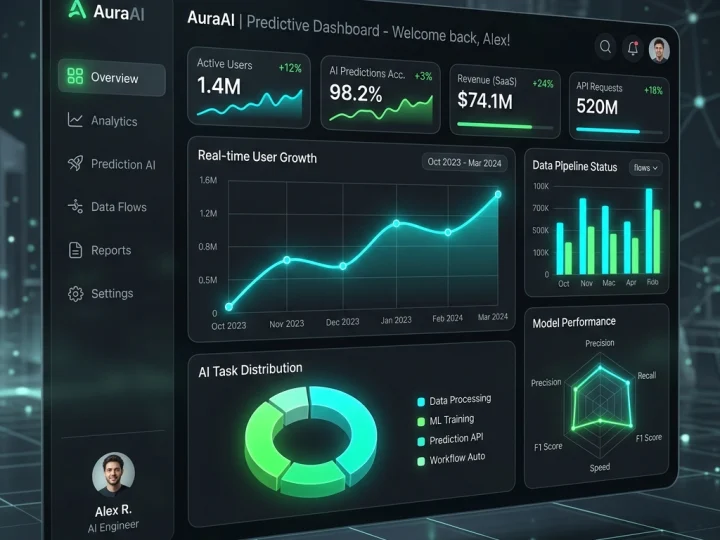
Orders, leads, invoices and stock copied between systems by a person. This is pure integration work, it is reliable once built, and it usually returns the investment fastest of anything on this page.

Invoices, forms, contracts and spec sheets read by hand and retyped into a system. This is where AI genuinely helps — extracting fields, with confidence thresholds and a review queue for anything uncertain.

Incoming enquiries, support tickets and applications classified and routed, with a draft response prepared for a person to approve. The human stays in charge; the sorting stops eating the morning.
Automation that survives contact with a real business, not a demo.
We measure where the hours actually go before proposing anything, and rank candidates by hours saved against effort.
Connecting the systems you already run, so data moves without a person in the middle.
Extraction, classification, summarising and drafting — with prompts, validation and thresholds tuned on your real data.
Review queues and approval steps wherever a wrong answer would be costly.
What happens when the model is unsure, an API is down, or input looks unusual. Designed in, not discovered later.
Logs, alerts and a simple report of what ran, what was flagged and what it saved.
If a process is not written down, automating it just makes the confusion faster.
Find your first automationThe processes businesses most often hand over first.
Store, CRM, accounting and ERP kept aligned without manual entry.
Invoices, forms and contracts read, extracted and filed with a review step.
Tickets classified, routed and drafted for human approval.
Product descriptions, translations and metadata drafted at scale, then edited.
Recurring reports assembled and delivered instead of collated by hand.
Search and question answering over your own documents, with citations.
Practical tools, chosen so you are not locked to one vendor.
CRM, ERP, store, helpdesk and accounting, connected over their APIs.
Laravel or Node services for the logic, queues and retries.
Commercial or open models chosen per task, behind an interface we can swap.
A simple interface for review queues, logs and results.
Five stages, and a deliberately small first automation.
We follow the work, measure the hours and list candidates ranked by value against effort.
We start with a single process that is high volume, well understood and low risk if it needs correcting.
Built against your actual records, not a clean sample, and measured for accuracy before anyone relies on it.
Released with a review queue, so the team sees what it does before trusting it unattended.
Hours saved and error rates reviewed, then the next process is automated using what we learned.
A first automation usually runs 3–8 weeks. Later ones are faster, because the plumbing already exists.
| Stage | Typical time | What you receive |
|---|---|---|
| Process audit | 1 week | Measured hours, ranked candidates, recommendation |
| Prototype | 1–2 weeks | Working prototype on your real data, with accuracy numbers |
| Build | 1–3 weeks | Integrations, queues, review interface, guardrails |
| Pilot with review | 1–2 weeks | Live with a human approval step and monitoring |
| Review & extend | Ongoing | Hours saved measured, next process selected |
Priced per automation after the audit, so you can judge it against the hours it removes. We also estimate running costs — model usage and infrastructure — because an automation that costs more than the person it replaced is not a saving.
Get your estimate NeuralSync
High-volume business logic, CRM updates and data pipelines were running on manual operations work — slow, expensive and easy to get wrong.
Read case study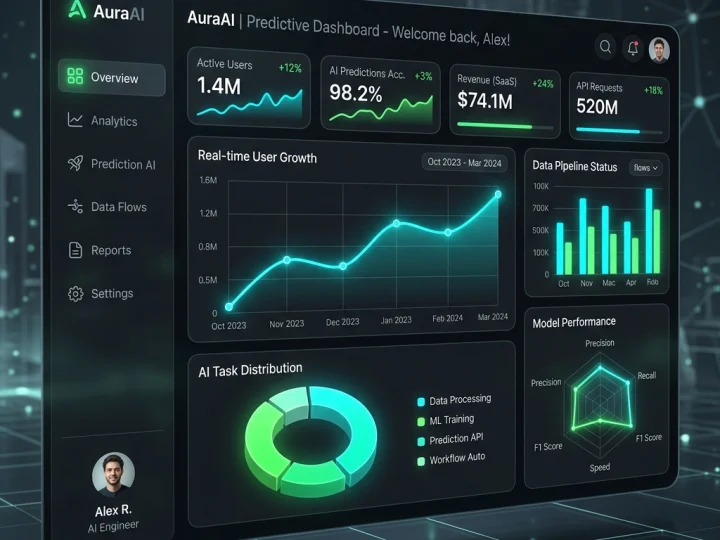 Nexus AI
A founding team needed a working product to put in front of investors — without an in-house engineering team and without a year of development.
Read case studyLaravel applications, APIs and portals — built for businesses whose workflow does not fit any off-the-shelf tool, and maintained so they still work in three years.
Learn moreWeb applications, dashboards and high-performance sites built in React and Next.js — typed, tested and structured so the next developer can read them.
Learn moreWe design and build Shopify and WooCommerce stores with fast product pages, a checkout that works on a phone, and the payment, shipping and inventory tools running quietly behind it.
Learn moreUpdates, backups, security monitoring, uptime checks and the small changes you need every month — handled by the team that builds websites for a living, not a support queue.
Learn moreWhat businesses ask before automating a process.
Still have a question? Ask us on WhatsAppTell us what you're trying to build, improve or automate.
Start your project



Trusted by 50+ founders & tech leaders worldwide