Audit before design
Analytics, search data, speed tests and a page-by-page review tell us what is losing you enquiries — so decisions are based on evidence, not taste.
We rebuild slow, dated websites into fast, modern ones — better Core Web Vitals, clearer journeys and more enquiries, with your search rankings carried across carefully.
Most websites do not fail because they look old. They fail because they take too long to load, bury the one thing a visitor came for, and make it hard to get in touch. A redesign that only changes colours and photographs leaves all of that in place — the site looks newer and still produces the same number of enquiries.
So we start by finding out what is actually going wrong. That means looking at your analytics to see where people leave, testing real page speed on a mid-range phone, checking which pages bring in search traffic today, and reading the site the way a first-time visitor would. Only then do we decide what to keep, what to rewrite and what to remove.
The second half of the job is protecting what already works. A redesign done carelessly can wipe out years of search rankings overnight. We keep URLs where we can, redirect the ones that change, carry over titles and descriptions, and monitor traffic after launch — so the new site starts from where the old one left off, not from zero.
A site does not have to be broken to be costing you money. If several of these are true, a redesign usually pays for itself in enquiries.
Ask for an auditBefore anything is designed, we find out what is actually losing you enquiries.

We test Core Web Vitals on a mid-range device and a normal connection, not on a fast laptop. Images, fonts, third-party scripts and hosting are measured separately, so you get a list of what to fix in order of impact rather than a vague score.

Analytics show which pages bring people in, where they leave and which journeys never reach the contact form. This is usually where the biggest wins hide — often in two or three pages rather than the whole site.

We list the pages that earn your search traffic today and map every URL before anything moves. That map is what protects your rankings through the rebuild, and it is written before a single design is approved.
Every redesign project includes these, whether we rebuild the whole site or rework part of it.
Analytics, search data, speed tests and a page-by-page review tell us what is losing you enquiries — so decisions are based on evidence, not taste.
Images, fonts, scripts and hosting tuned until the site loads quickly on a normal phone, which is what Google actually measures.
Navigation, page structure and calls to action reworked so the next step is obvious on every page.
A current look that fits your brand, designed for the content you really have rather than placeholder text.
URL mapping, redirects, metadata, schema and sitemaps handled properly, with rankings monitored after launch.
Cleanly structured pages and fields, so your team can update the new site without breaking the design.
A redesign that ignores your search rankings can undo years of work in a single afternoon.
Ask for an auditSix stages, with a clear decision point after the audit.
Analytics, search performance, speed tests and a page-by-page review, written up as findings you can read and question.
We agree what to keep, rewrite or remove, map old URLs to new ones, and set a fixed estimate and timeline.
New page structure and templates, designed around the journeys that actually produce enquiries.
Visual design for every template, on desktop and mobile, approved before development starts.
The new site is built, content migrated, redirects created, and everything tested on a staging link.
We launch, verify redirects and tracking, and watch rankings and traffic for the first weeks after go-live.
Most redesigns run 4–8 weeks. Large sites with hundreds of pages or a platform change take longer, and the audit tells us which one you are before any commitment.
| Stage | Typical time | What you receive |
|---|---|---|
| Audit | 1 week | Written findings, priorities and recommendations |
| Plan & scope | 2–4 days | Scope, URL map, fixed estimate, timeline |
| Structure & wireframes | 1 week | New sitemap and wireframes for key templates |
| Design | 1–2 weeks | Designed templates, desktop and mobile |
| Build, migration & launch | 2–3 weeks | Staging review, redirects, live site, post-launch checks |
Not every site needs the same treatment. These are the shapes a redesign usually takes.
A new design and a new build on a modern stack, when the current site is beyond repair or on outdated software.
Keeping the structure and platform, updating the look, typography and key templates — the quickest way to look current.
No visual change: images, scripts, caching and hosting fixed until the site passes Core Web Vitals.
Moving from an old CMS, a builder or hand-coded pages to WordPress or a headless stack, with content migrated.
Reworking the pages that matter — services, pricing, contact — around one clear action, and measuring the result.
Taking over a half-finished or abandoned build, auditing what exists, and finishing it properly.
We choose the platform for your team, not for our convenience, and tell you what each option means for cost and maintenance.
The usual choice when your team publishes often and wants to edit pages without a developer.
When speed is the priority or the site has to talk to other systems.
When the redesign also involves selling, so the store and the content live together.
Sometimes the fastest win is fixing what you have. If that is true, we will say so.
A redesign is usually quoted after the audit, because that is when we know whether you need a rebuild or a focused fix. If the audit shows your current site can be saved, we will tell you — that conversation is cheaper for both of us than an unnecessary rebuild.
Get your estimate Aura Premium Packaging
A premium skincare and packaging brand with a store that looked and felt nothing like the products it was selling — and a mobile experience that lost buyers at the checkout.
Read case study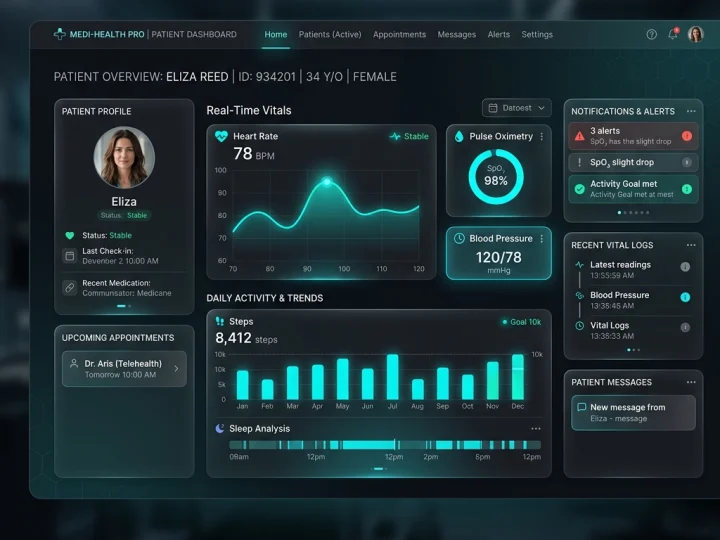 Pulse Telehealth
Clinicians were juggling disconnected tools for patient vitals, appointments and notes — under rules that leave no room for improvisation.
Read case studyCore Web Vitals, page speed and server tuning for WordPress, WooCommerce and Shopify — measured on mid-range devices and real connections, not on a developer’s laptop.
Learn moreWe design and build custom websites on WordPress or a modern headless stack — fast to load, easy for your team to manage, and built around one job: turning visitors into enquiries.
Learn moreResearch, page work and testing that turn existing visitors into enquiries and orders — usually cheaper than buying more traffic, and the gains do not stop when the ad budget does.
Learn moreUpdates, backups, security monitoring, uptime checks and the small changes you need every month — handled by the team that builds websites for a living, not a support queue.
Learn moreWhat clients ask before committing to a rebuild.
Still have a question? Ask us on WhatsAppTell us what you're trying to build, improve or automate.
Start your project



Trusted by 50+ founders & tech leaders worldwide