Product pages that answer questions
Clear photography, specifications, sizing, delivery timelines, stock status and reviews — laid out so a shopper does not have to email you before buying.
We design and build Shopify and WooCommerce stores with fast product pages, a checkout that works on a phone, and the payment, shipping and inventory tools running quietly behind it.

An online store is judged in seconds and abandoned just as fast. Shoppers arrive from an ad or a search, look at one product, and decide whether this shop feels safe enough to hand over a card number. Slow images, a confusing checkout or a missing delivery date is all it takes for them to leave — and most of them never come back to tell you why.
That is why we treat a store as a sales process rather than a catalogue. Product pages need the photographs, specifications, sizing help and reviews that answer the question a shopper is actually asking. Category pages need filters that match how people shop, not how your warehouse is organised. And the checkout needs to be short, obvious, and quick on a mid-range phone on mobile data, because that is where most of your traffic is.
Behind the storefront, we connect the plumbing: payment gateways, shipping rates, taxes, stock levels, invoices and the emails that go out after an order. The aim is simple — you spend your time on products and marketing, not on copying order details between systems by hand.
Three places where small decisions change the number of orders you get each month.

Photography that shows scale and detail, specifications written in plain language, delivery dates, stock status and reviews — so nobody has to email you before they can buy. We design this page first, because it is where most of your traffic lands from search and ads.

Guest checkout, address autofill, clear shipping costs and the payment methods your market actually uses. Every extra field costs orders, so we strip the checkout to what is genuinely needed and test it on real phones before launch.

Stock, pricing, invoices, shipping labels and order emails connected to the tools you already use. When this is set up properly your team stops retyping order details and starts spending the time on selling instead.
The parts that decide whether visitors turn into orders, included in every store we build.
Clear photography, specifications, sizing, delivery timelines, stock status and reviews — laid out so a shopper does not have to email you before buying.
Short forms, guest checkout, saved addresses and the payment methods your customers actually use, tested on real phones.
Live or table rate shipping, country-based taxes, and gateways such as Razorpay, Stripe, PayPal or the local option your market prefers.
Optimised images, lean themes and caching, because a one-second delay on a product page is measured in lost orders.
Search that tolerates typos, filters for the attributes people shop by, and category pages that search engines can index properly.
Analytics, conversion tracking and e-commerce events set up correctly, so your ad spend is judged on real numbers.
Most stores do not need more traffic. They need the traffic they already have to check out.
Get a store reviewFrom a first store to a catalogue with thousands of SKUs, the work changes shape. These are the projects we take on most.
Brand, storefront, product templates and checkout set up together, so your first sale does not wait on three different freelancers.
Moving from an ageing custom cart, Magento or a builder onto Shopify or WooCommerce, with products, customers, orders and SEO carried across.
Thousands of SKUs with variants, bulk imports, feeds and filtering that stays fast as the catalogue grows.
Customer-specific pricing, minimum order quantities, quote requests and account logins alongside a normal retail storefront.
Recurring orders, memberships, downloads and licence keys, with the billing and customer portal that go with them.
Keeping stock and prices aligned between your store and Amazon, Flipkart, Instagram or a POS system.
Both are good choices, for different reasons. In the first call we recommend one based on your catalogue, your team and your budget — and we explain the trade-offs honestly.
Hosting, security and payments handled for you. Best when you want to focus on selling rather than maintenance.
Full control and no per-sale platform fee, on top of WordPress. Best when content and SEO matter as much as the store.
A custom storefront on top of Shopify or Woo, for brands that need maximum speed or an unusual buying flow.
Coming off Magento, OpenCart, Wix or a custom cart — we move the data and keep the rankings you already have.
Six stages, each ending in something you can see and approve.
We look at your products, variants, shipping rules and the tools you already use, then agree the scope, platform and a fixed estimate.
Category structure, filters and the product page layout are mapped before any visual design, because this is what most affects sales.
Storefront, category, product, cart and checkout screens designed for desktop and mobile, with your brand applied throughout.
The store is built and connected to payments, shipping, tax, stock and email. You get a staging store to click through.
Products are imported, and we place real test orders end to end — payment, invoice, confirmation email, refund — before launch.
We go live carefully, watch the first orders, and train your team on adding products, running offers and handling orders.
Store pricing depends far more on the catalogue and the integrations than on the number of pages. After a free 30-minute call you get a fixed estimate with a clear scope, plus an honest view of the monthly platform and app costs you should budget for.
Get your estimateTraffic without orders is usually a store problem, not an advertising problem. If several of these sound familiar, the fix is often cheaper than more ad spend.
Get a store reviewA standard store takes 6–12 weeks. Large catalogues, migrations and custom B2B rules take longer, and you get a dated plan before we start.
| Stage | Typical time | What you receive |
|---|---|---|
| Discovery & scope | 4–6 days | Platform recommendation, scope, fixed estimate |
| Structure & wireframes | 1–2 weeks | Category map, filters, product page layout |
| Design | 2 weeks | Designed storefront, product, cart and checkout screens |
| Build & integrations | 3–4 weeks | Staging store with payments and shipping connected |
| Data, testing & launch | 1–2 weeks | Imported catalogue, test orders, live store, training |
 Aura Premium Packaging
A premium skincare and packaging brand with a store that looked and felt nothing like the products it was selling — and a mobile experience that lost buyers at the checkout.
Read case study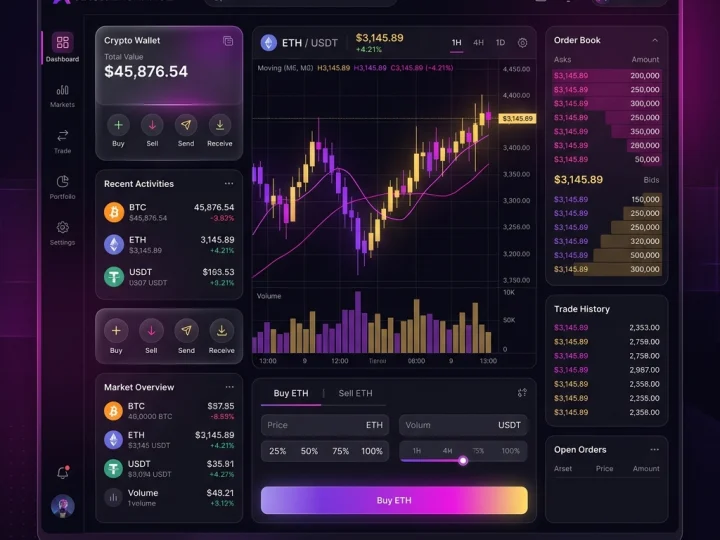 CryptoFlow
Active traders needed institutional-grade speed and cross-chain liquidity in one terminal, on a web app that stays readable while every number on screen keeps moving.
Read case studyCustom Shopify themes, app integrations and migrations — built so your store looks like your brand, loads fast, and makes buying the easiest thing on the page.
Learn moreCustom WooCommerce stores on WordPress — your content and your shop in one place, with full control over the checkout, the data and the costs.
Learn moreResearch, page work and testing that turn existing visitors into enquiries and orders — usually cheaper than buying more traffic, and the gains do not stop when the ad budget does.
Learn moreUpdates, backups, security monitoring, uptime checks and the small changes you need every month — handled by the team that builds websites for a living, not a support queue.
Learn moreThe questions store owners ask us most before starting a project.
Still have a question? Ask us on WhatsAppTell us what you're trying to build, improve or automate.
Start your project



Trusted by 50+ founders & tech leaders worldwide